India’s rich textile heritage is woven with stories of skilled artisans, vibrant traditions, and centuries-old craftsmanship. Among the many embroidery styles that have stood the test of time, Chikankari and Kutch Embroidery hold a special place. Although both are deeply rooted in Indian culture, they offer completely different aesthetics, techniques, and styles.
At PoshakWeaves, we believe every handcrafted outfit tells a story. Whether you’re drawn to the graceful elegance of Chikankari or the vibrant charm of Kutch embroidery, understanding these beautiful art forms can help you choose an outfit that truly reflects your personality.
The Graceful World of Chikankari
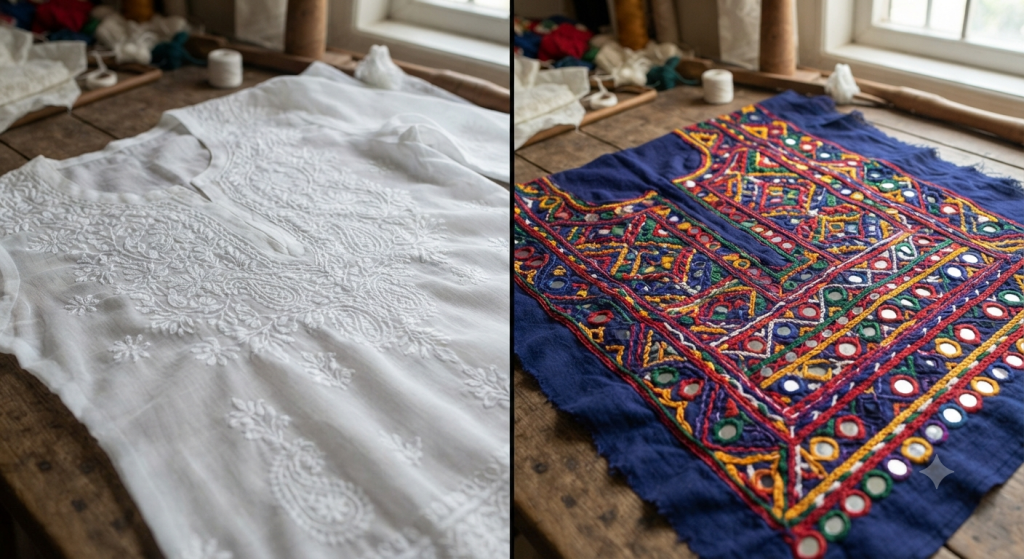
Imagine a soft white kurta with delicate floral patterns that almost seem to bloom across the fabric. That’s the timeless beauty of Chikankari.
Originating in Lucknow, Uttar Pradesh, Chikankari is one of India’s oldest and most admired embroidery traditions. It is believed to have flourished during the Mughal era and continues to be loved for its understated elegance and intricate craftsmanship.
Traditionally, artisans embroidered fine white cotton threads onto lightweight muslin fabric. Today, Chikankari is beautifully adapted to modern fabrics like cotton, georgette, chiffon, organza, silk, rayon, and modal, making it suitable for both everyday wear and festive occasions.
What makes Chikankari truly special is the patience and precision behind every stitch. Skilled artisans spend hours—sometimes even days—carefully creating floral vines, leaves, paisleys, and intricate patterns by hand. Techniques such as Bakhiya (Shadow Work), Murri, Phanda, Hool, Jali, and Tepchi give the embroidery its delicate texture and signature elegance.
Because of its lightweight feel and breathable fabrics, Chikankari has become a favourite choice for women who appreciate comfort without compromising on style. Whether it’s a kurta for work, an elegant suit set for family gatherings, or a graceful saree for festive celebrations, Chikankari effortlessly fits every occasion.
The Vibrant Art of Kutch Embroidery
If Chikankari is known for its subtle elegance, Kutch Embroidery is celebrated for its bold colours and lively spirit.
This beautiful embroidery style comes from the culturally rich region of Kutch in Gujarat, where artisan communities have preserved their traditional skills for generations. Every piece reflects the colourful lifestyle, heritage, and creativity of the people who create it.
One glance at Kutch embroidery is enough to recognize its distinctive style. Bright threads, intricate geometric designs, colourful floral patterns, and sparkling mirror work come together to create garments full of life and character.
Unlike the soft, minimal appearance of Chikankari, Kutch embroidery embraces colour and texture. The embroidery often features motifs inspired by nature and village life, including peacocks, camels, elephants, flowers, and traditional tribal patterns. The addition of mirror work, known as Shisha embroidery, gives every outfit a festive sparkle.
Artisans carefully handcraft these intricate designs on fabrics like cotton, silk, khadi, linen, velvet, and other handwoven textiles. Since every stitch is done by hand, each garment becomes a unique piece of wearable art.
Whether it’s a beautifully embroidered lehenga, a colourful saree, a statement jacket, or a festive kurti, Kutch embroidery instantly adds energy and personality to any wardrobe.
Which One is Right for You?
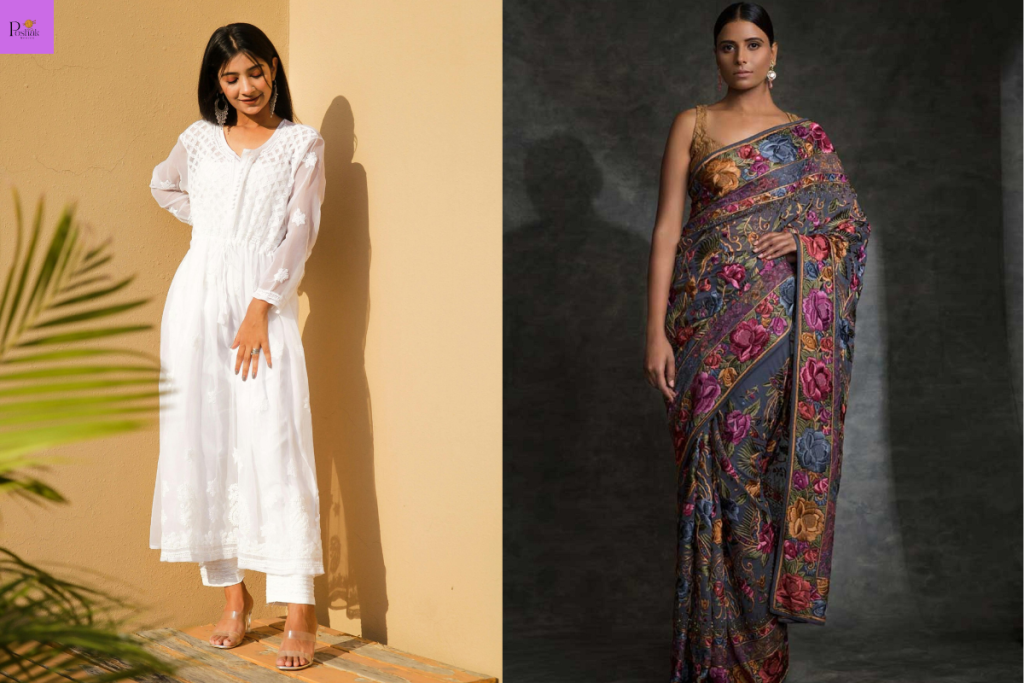
Although both embroidery styles celebrate India’s incredible craftsmanship, they are quite different in appearance and purpose.
Chikankari is ideal for those who appreciate understated elegance. Its soft embroidery, subtle colours, and lightweight fabrics make it perfect for office wear, casual outings, summer events, and elegant celebrations.
Kutch embroidery, on the other hand, is made for those who love vibrant fashion. Rich colours, intricate mirror work, and bold patterns make it an excellent choice for weddings, festivals, Garba nights, cultural events, and special occasions where you want your outfit to make a statement.
The choice ultimately depends on your personal style. If you enjoy minimal sophistication, Chikankari is a timeless addition to your wardrobe. If you prefer colourful, artistic, and eye-catching designs, Kutch embroidery is sure to become your favourite.
Styling Tips for Every Occasion
One of the reasons these embroidery styles remain so popular is their versatility.
A simple white Chikankari kurta paired with straight-fit trousers and silver jewellery creates an elegant office look. For festive occasions, a pastel Chikankari Anarkali with embroidered dupatta and traditional juttis offers effortless grace. Even a Chikankari kurti styled with denim creates a beautiful Indo-western outfit.
Kutch embroidery offers equally versatile styling possibilities. Pair a colourful embroidered kurta with palazzos and oxidised jewellery for festive gatherings. A heavily embroidered Kutch lehenga creates a stunning look for weddings and celebrations, while a handcrafted embroidered jacket layered over a plain dress instantly adds a fashionable fusion twist.
Caring for Handcrafted Embroidery
Hand embroidery deserves thoughtful care so that its beauty lasts for years
Whenever possible, choose gentle hand washing or professional dry cleaning. Use mild detergent, avoid harsh scrubbing, and never use bleach on embroidered garments. Dry your outfits in the shade to preserve their colours and store them folded in breathable cotton bags. When ironing, always turn the garment inside out and use low heat to protect the embroidery.
A little extra care helps preserve the artistry that skilled artisans have lovingly created.
Why Handcrafted Embroidery Will Always Be Special
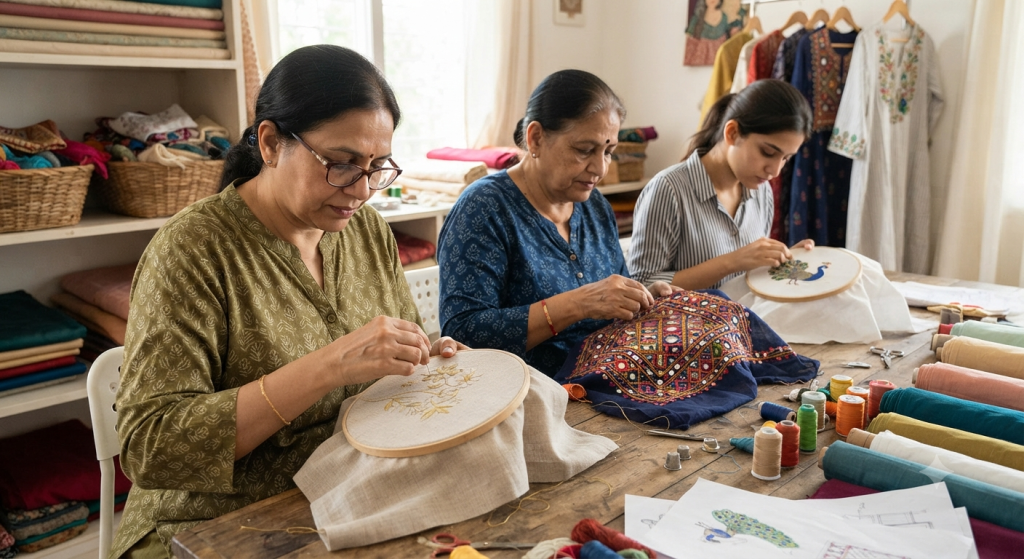
In today’s world of fast fashion, handcrafted embroidery reminds us that true beauty takes time. Every stitch reflects the dedication, creativity, and expertise of artisans who continue to preserve India’s rich textile traditions.
At PoshakWeaves, we are proud to celebrate these timeless crafts by bringing you ethnic wear that beautifully blends heritage with modern fashion. Whether you choose the delicate elegance of Chikankari or the vibrant artistry of Kutch embroidery, you’re not simply wearing an outfit—you’re wearing a story passed down through generations.
Explore our collection of handcrafted sarees, suit sets, kurtas, and lehengas, and experience the charm of authentic Indian craftsmanship with every piece.
Frequently Asked Questions (FAQs)
1. What is the difference between Chikankari and Kutch embroidery?
Chikankari is a delicate hand embroidery style from Lucknow, Uttar Pradesh, known for its floral motifs and subtle elegance. Kutch embroidery, on the other hand, originates from Kutch, Gujarat, and is famous for its vibrant threadwork, mirror work, and bold geometric patterns. While Chikankari is ideal for a graceful, minimal look, Kutch embroidery is perfect for festive and statement outfits.
2. Which fabric is best for Chikankari embroidery?
Chikankari embroidery is commonly crafted on cotton, mulmul, georgette, chiffon, silk, organza, rayon, and modal fabrics. Cotton and mulmul are popular for everyday comfort, while georgette and silk are preferred for festive and special occasions.
3. Is Kutch embroidery completely handmade?
Yes, authentic Kutch embroidery is traditionally handcrafted by skilled artisans. Every design is created using detailed needlework and often includes colourful thread embroidery and mirror work, making each piece unique and showcasing the rich heritage of Gujarat.
4. How should I care for Chikankari and Kutch embroidered garments?
To maintain the beauty of embroidered garments, it is recommended to hand wash them gently with a mild detergent or opt for dry cleaning. Avoid using bleach, dry the garments in the shade, and iron them on the reverse side using low heat to protect the embroidery.
- Which embroidery style is better for weddings and festive occasions?
Both embroidery styles are beautiful, but they suit different preferences. Chikankari offers a graceful and elegant look for daytime functions and intimate celebrations, while Kutch embroidery, with its vibrant colours and mirror work, is an excellent choice for weddings, festivals, Garba nights, and grand festive occasions.